Oenosan

Product Image

Natural leaf fertilizer

Production process of Oenosan

The individual components of Oenosan are in their pure form not applicable in agriculture, because the particles are just too big.

It is quite easy to grind the algae, but the problem of the dolomite rocks has to be resolved in a very specific way. The final product is retrieved by micronisation of the dolomite rocks. The stone particles are torn from each other into nano sized parts in a cyclotron at a rate of 3000 collisions / second.

It produces calcite particles capable to penetrate (through the stomata) in the leaf where they serve as a source of calcium and CO2.

Due to the collisions Oenosan micronised powder is negative loaded. After dilution in water the spray solution becomes negative loaded and this solution sticks to leaves wich are positive loaded.

Characteristics of Oenosan

The reason Oenosan is called a leaf fertilizer is that the nutrition is taken directly by the leaves through their stomata (small mouths).

Once the mixture of calcite, zeolite and algae diluted with water has been sprayed on the leaf surfaces, the calcite dissolves slowly in the heart of the cultivar and creates an atmosphere with Carbon dioxide ( CO2) and

Calcium oxide (CaO) which activates the photosynthesis with as a result, better crop.

Photosynthesis and photosperpiration are two competition mechanisms and are controlled by the carboxylase enzyme Ru-di-p ( RUBISCO).

The ability to catalyses any of these two reactions is under the influence of the CO2/O2 ratio.

At a given moment saturation of CO2 takes place, causing the stomata of each leave to close. Evaporation reduces dramatically, and also the need of water. This enhances the photosynthesis by about 30 %, providing that ample sunlight is available.

Oenosan calcium effects

Calcium is essential for

1) STUCTURE

  • Formation of the cell walls ( polysaccharide compounds)
  • The integrity of the cell membranes

2) FUNCTIONAL

  • Mediator of the immunity response
  • Calcium is one of the ATP ingredients: the enzyme necessary for transformation of ATP into ADP, itgives the energy necessary for the synthesis of sugar in the plant.

Oenosan effects on the plant

  • A more powerful crop with quite resistant fruit
  • The leaves are bigger, stronger, greener which is shown in an increased   growth, resulting in a shorter vegetative cycle (up to 30% reduction).
  • A tendency of more pigments (in case of red fruit) and an increase of sugars of about 0, 6% resulting in better organoleptic characteristics.
  • A longer shelf live of the crop
  • An increased defense against water shortage and a decrease of the need of water up to 25% and more.
  • Improvement of the soil quality.

Technical Information

Oenosan is a calcareous fertilizer, a mineral nutrition supplement.

It is composed of Dolomite (calcite mostly calcium carbonate or CaCO3), Zeolite and a small portion of marine algae.

Calcite and Zeolite is won through the exploitation of dolomite rocks, remnants of a huge European inner sea in the first era of the earth. Dolomite rocks are especially rich in minerals (Calcium, Magnesium, Silicium, and Ferrum) and spur elements that trigger Specific enzyme reactions.

Zeolite is a 100 % natural volcanic mineral, a soft and porous stone.

Marine algae complement contains a huge part of oligo-elements beneficial for plants.
The algae are obtained from areas where relatively little pollution exist to date.

The unique combination of these components leads to very specific characteristics witch
provides the success of the use of Oenosan.

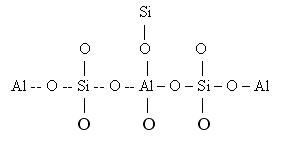
Zeolite: Zeolite possesses characteristics that are attributed to its three dimensional

honeycomb structure, wich creates a phenomenal internal surface that canmount up to 450m²/g.This X-and Y-axis roster consists of Silicium ions and on some spots Aluminium ions that are bound by Oxygen’s atoms ( 70 % of Zeolite is Silicium SiO² or silica).The distribution Si / Al has an absolute impact on the negative energy level, wich means that they can be neutralized by positive ions who do not form part of this honeycomb structure . This create an enormous potential for information transfer, during wich intelligent biological information can be stored in the corners of this Silicium ‘grid’.

As a result of the molecular structure, Zeolite does act as an ion changer, an absorber, a catalyser and molecular sieve. The material can absorb up to 70 % of its mass in a fluid (sponge effect), wich means that it can be used in an economical way. It has a huge benefit in areas with little precipitation or during exceptional hot summers. (Areas in Europe where no irrigation is allowed due to the viticulture regulations.)

Zeolite has the ability to absorb and bind heavy metals as a result of industrial or modern agriculture pollution. Such as lead, cadmium, nickel, cupper…
It also absorbs organic wastes as phosphates, nitrates and ammoniac.
A very useful asset is that the first organic scents associated with grey or black rot are absorbed and this prevents insects to find their way to the cultivars.

Oenosan is 100 % pure mineral and is suitable for organic and biological agriculture.

It is certified by CERTISYS.  The authenticity of the certificate of conformity for products usabl in organic agriculture can be verified on the website: www.certificat.certisys.eu (number: 701615 and code: 17678)

You can reach us at

Copyright © 2019

Scroll to Top